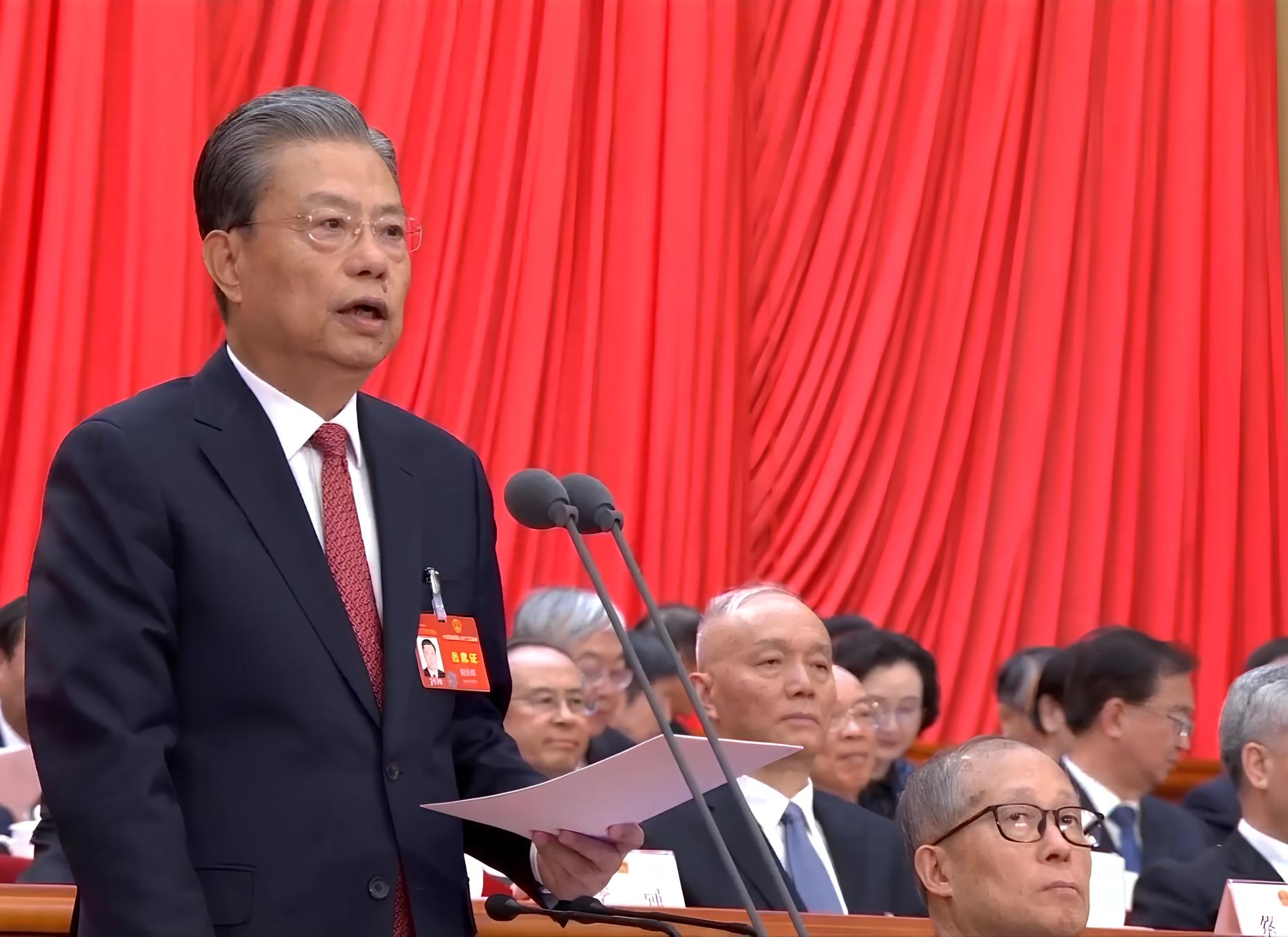

Every year, analysts watch China's National People's Congress — the NPC — looking for signals. This year's signals were not subtle. Beijing used its most important political gathering to announce a strategic posture that should prompt immediate reassessment across Western governments, defence establishments, financial institutions, and multinational corporations.
The message from Beijing was clear: China is accelerating its technology-industrial complex, reducing external dependencies, and positioning itself as the world's stable alternative superpower — all while the US is distracted. For organisations that operate at the intersection of China and Western interests, the risk landscape just shifted.
What Beijing actually said
Strip away the diplomatic language and three strategic commitments stand out from this year's NPC:
None of this is surprising in isolation. What the NPC made clear is that these are no longer incremental policy adjustments — they are structural commitments, embedded in the 15th Five-Year Plan and backed by sovereign capital at scale.
The risk that most organisations are not tracking
The NPC's macro-level announcements receive media coverage. What doesn't get coverage is the entity-level reality that flows from them.
When Beijing mandates that AI be embedded across the economy, state capital flows into thousands of companies — many of which present as private, commercial, or internationally oriented. When it prioritises semiconductors and robotics, entities previously considered low-risk become nodes in strategic supply chains. When it expands state-backed investment, corporate ownership structures become more complex and more opaque.
This creates five concrete risk categories for Western organisations. Export control teams face a widening target list: quantum, 6G, and brain-computer interfaces are all explicitly named NPC priority sectors — all dual-use, and the entities developing them are not always the obvious ones. Investment screening faces the same problem in a different form: expanding state-backed investment means private-looking Chinese firms are increasingly state-linked, and beneficial ownership is harder to trace, not easier. Supply chain and procurement teams need to understand that China's self-reliance push is restructuring its supply chains internally — your supplier's supplier may now sit inside a strategic programme you cannot see. For defence and intelligence customers, technology is now explicitly framed by Beijing as strategic, not economic: the line between China's commercial tech sector and its defence industrial base is narrowing by design. And for corporate risk and compliance functions, the "AI+" mandate expands the perimeter of concern to sectors previously considered lower risk — logistics, healthcare, education — where any Chinese partner may now carry strategic exposure.
The Intelligence Gap
Most Western organisations are trying to manage China-related risk with tools that were not built for this problem.
Commercial databases give you registration records. Sanctions lists tell you who is already designated. News monitoring gives you yesterday's headlines. None of these tell you what is happening right now inside China's corporate and defence-industrial networks — who owns what, which entities are state-linked, where capital is flowing, and which supply chain relationships carry strategic exposure.
The NPC has just confirmed that this gap is getting wider, not narrower. The speed and scale of China's technology-industrial expansion means the entity landscape is changing faster than conventional due diligence can track.
How Datenna closes the gap
Datenna is built specifically for this problem. We provide structured intelligence on China's defence-industrial base, techno-economic landscape, and corporate networks — the entity-level picture that sits beneath the macro headlines.
Find — Know who you're actually dealing with
Datenna's platform maps the ownership structures, state linkages, and corporate networks of Chinese entities — including the opaque relationships that conventional databases miss. When Beijing's investment priorities shift, our data reflects the resulting changes at the entity level.
Brief — Understand the strategic context
We translate raw data into actionable intelligence — structured assessments of which entities are operating in strategic domains, which supply chain relationships carry exposure, and where the risk is moving. Our analysts understand both the corporate and defence-industrial dimensions of China's technology ecosystem.
Track — Stay ahead as the landscape evolves
The NPC signals the direction; the entity landscape shifts in the months that follow. Datenna's monitoring capability alerts you to changes in the entities and relationships that matter to you — before they become a compliance problem or a reputational one.
"The NPC does not create the risk. It confirms it. China's technology-industrial acceleration is structural and state-backed. The organisations that navigate it successfully will be those with entity-level intelligence— not just macro awareness."
Want to understand your China exposure in light of this year's NPC?
Contact the Datenna team to discuss how our platform can help your organisation find, assess, and monitor the entities that matter.
Get in touch →